Puget Rackstation Threadripper PRO WRX90 SAGE SE workstation
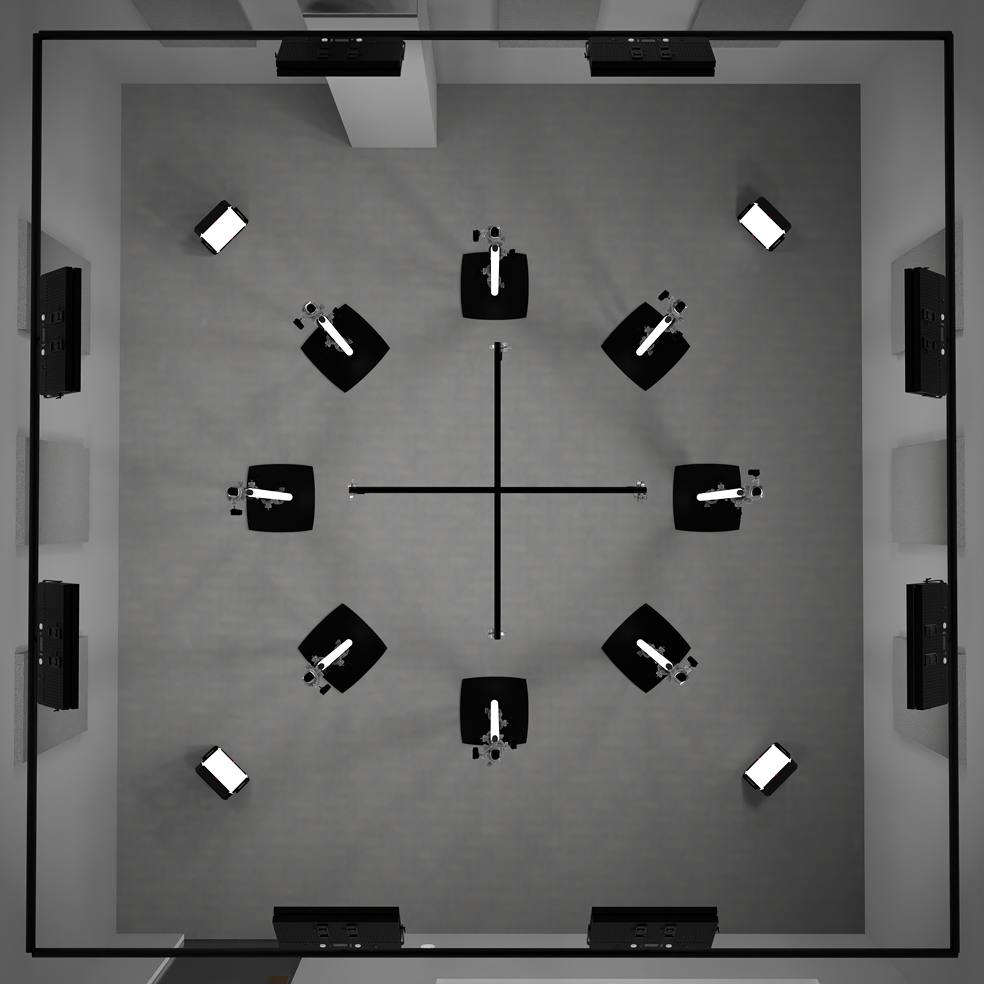
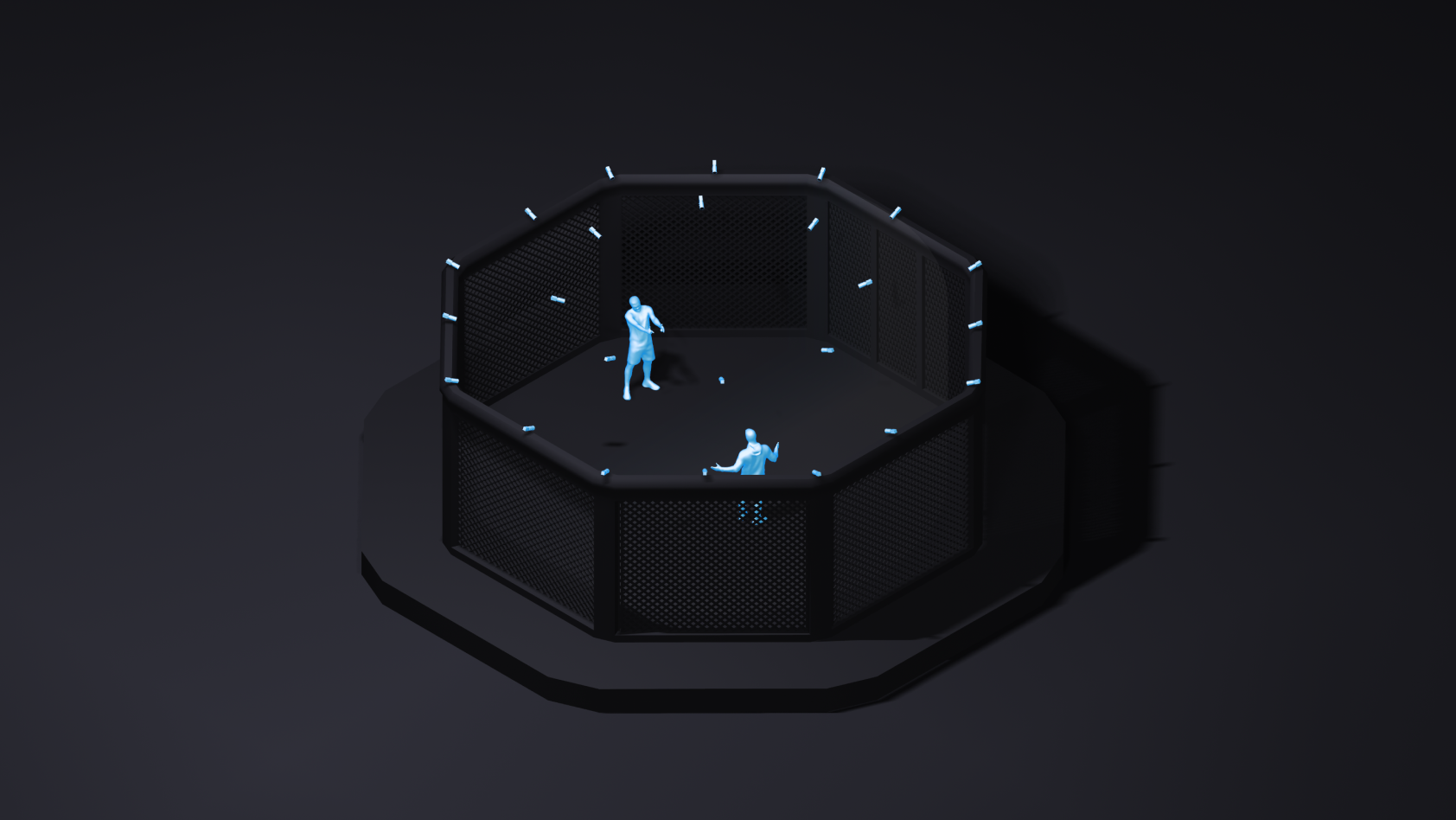
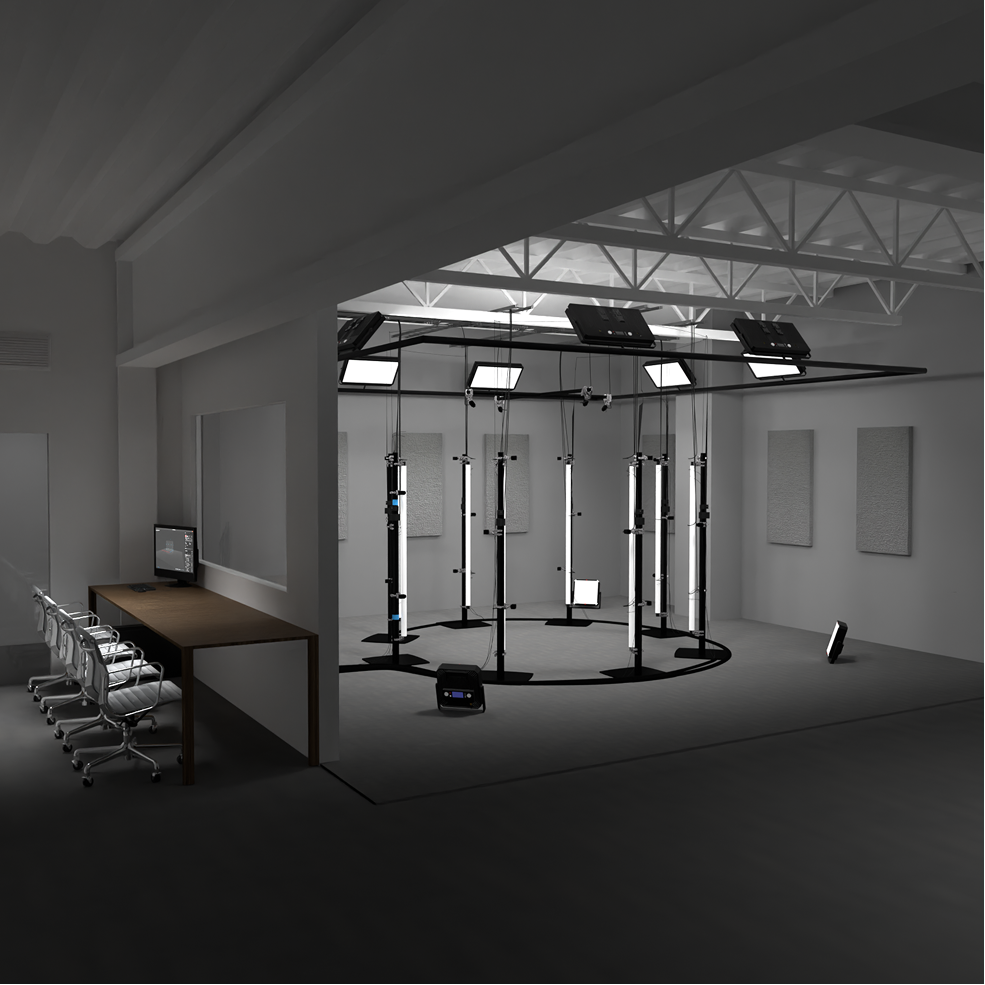
A smaller volume generally yields higher apparent detail and stronger depth accuracy, while a larger volume supports broader movement. When sizing the stage, plan for overall room footprint, usable capture area, and sufficient overhead clearance.
Kioxia E1.S storage (122 TB)
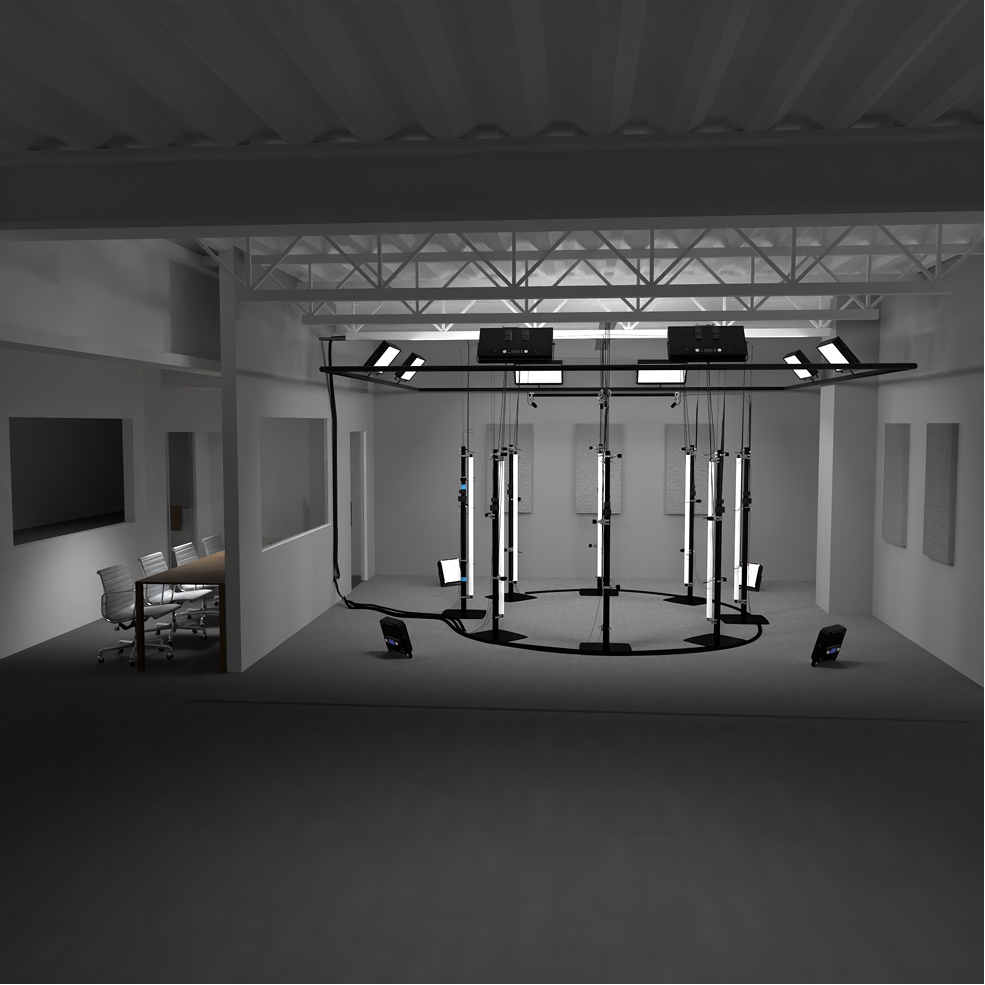
Within the capture volume, use neutral, matte, non-reflective finishes on walls and floors to minimize reflections and color spill. Where possible, provide separate entry paths for the stage and control room to keep sessions efficient and reduce disruption.
Highpoint Rocket 1749E storage PCIe card
Netgear M4350-40X4C managed 40x10G network switch
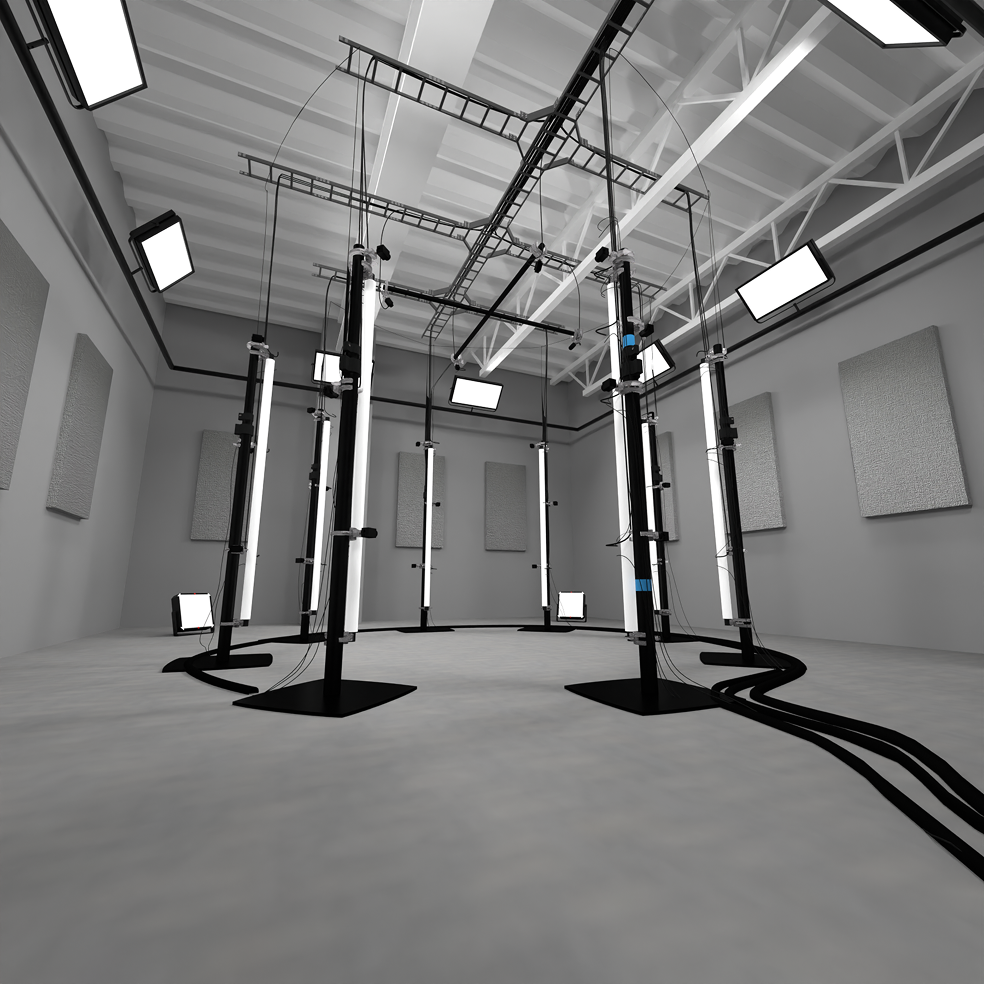
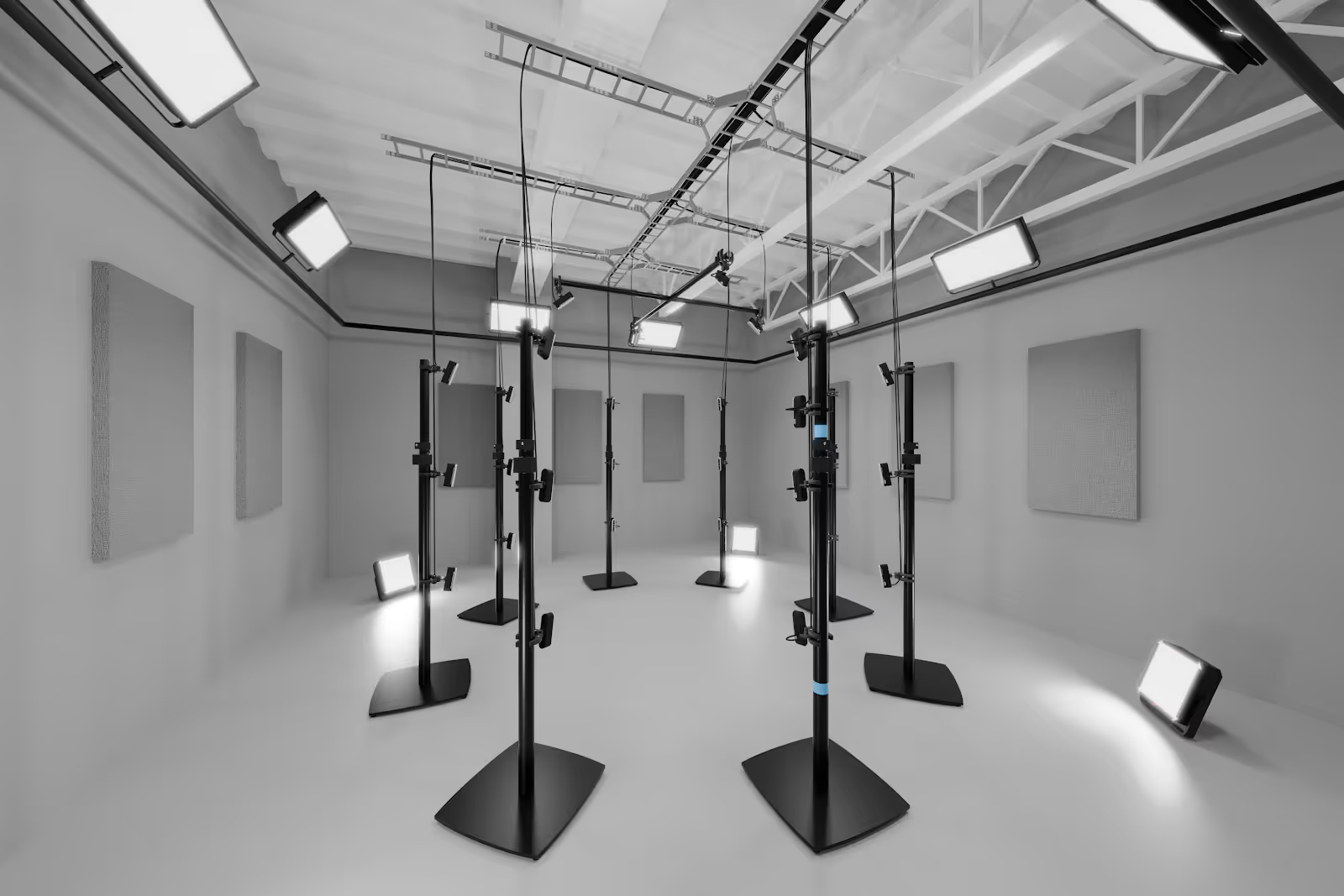
Precise placement, leveling, and aiming are essential for consistent calibration and reconstruction quality. Plan mounting hardware, cable routing, and capture tray placement as part of the overall layout from the start.
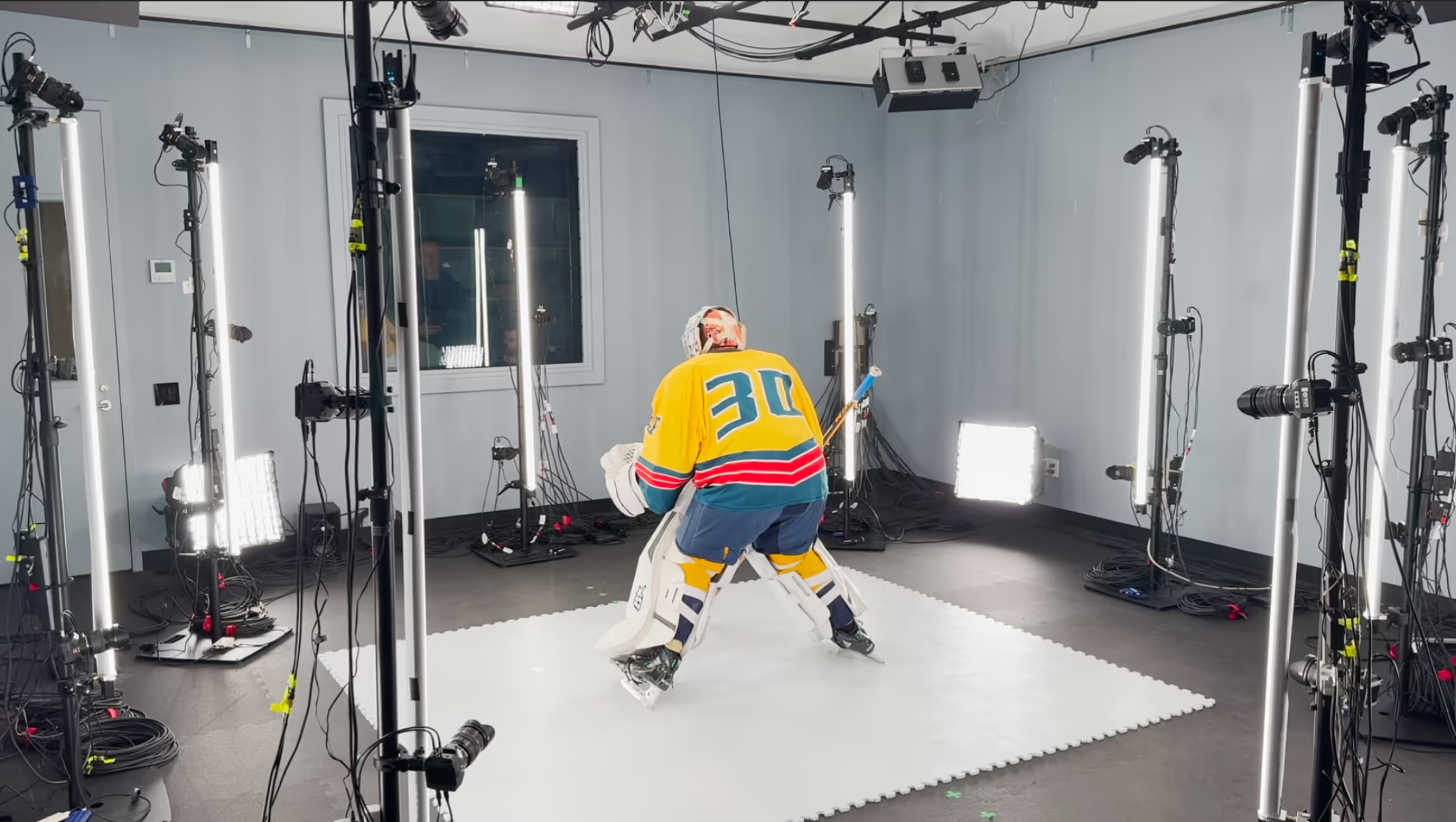
Volumetric capture benefits from bright, even, diffuse lighting. A common approach uses panel lights for base illumination, plus LED tube lights placed around the volume to soften shadows and balance light across the subject. We often recommend tube lights mounted vertically to the camera poles to enhance and supplement head-to-toe even lighting.
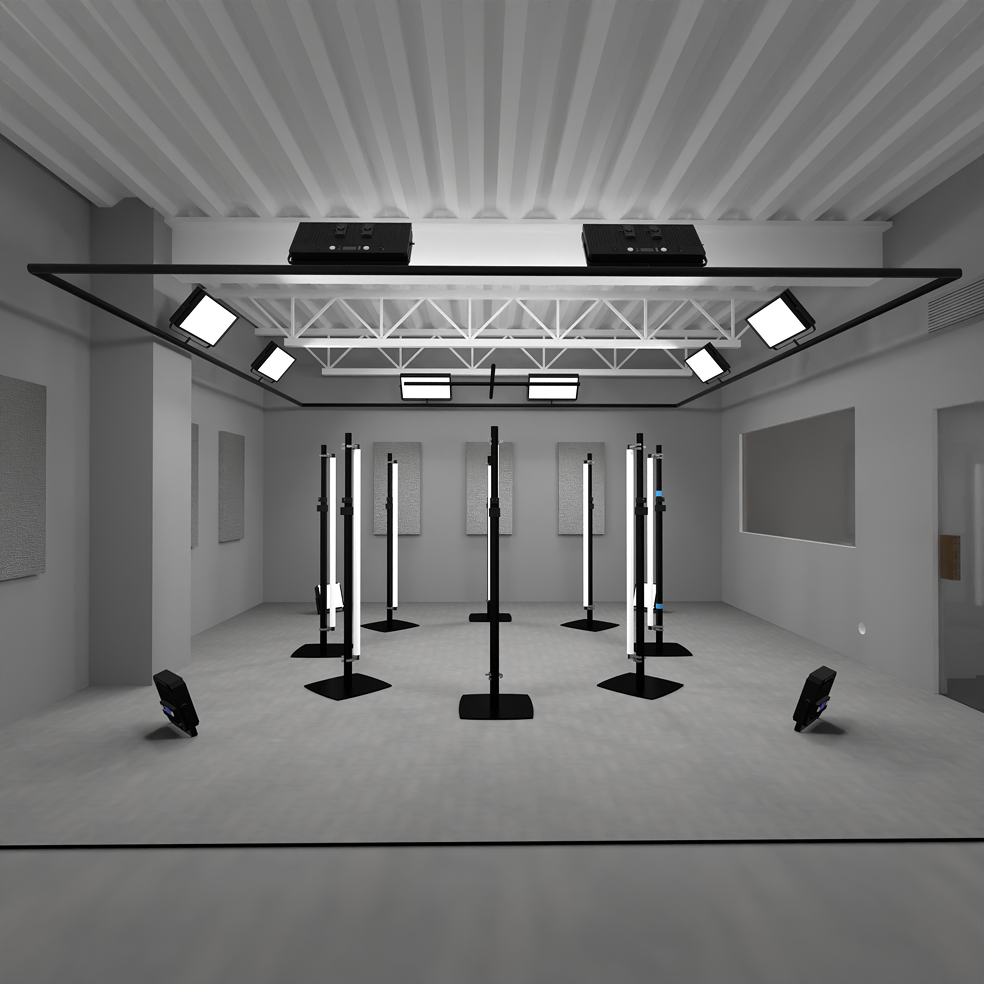
Exact fixture counts and placement depend on room dimensions, rigging limitations, and budget. The objective is consistent exposure from every angle, minimizing shadows, glare, and hotspots.
Clean audio requires isolation from external noise and control of reflections inside the capture room. Solid construction and well-sealed surfaces reduce sound bleed, while acoustic treatment helps manage reverberation.
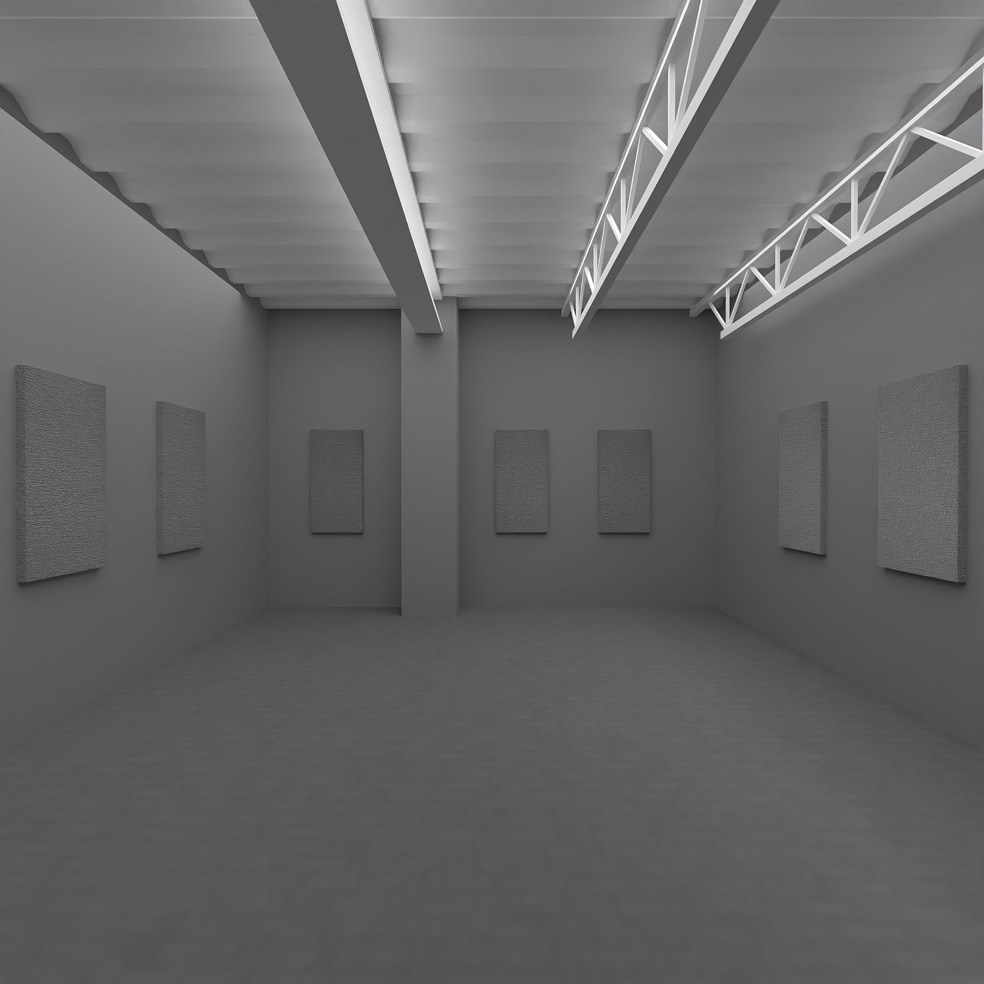
Treatment choices can be adapted to your space, as long as the capture environment remains acoustically predictable and neutral.
Studio operation typically runs from the adjacent control room, where sessions are monitored and directed. A host workstation or other core compute infrastructure handles camera control, recording, and processing, with hardware requirements scaling with camera count, camera type, and any real-time workflows.
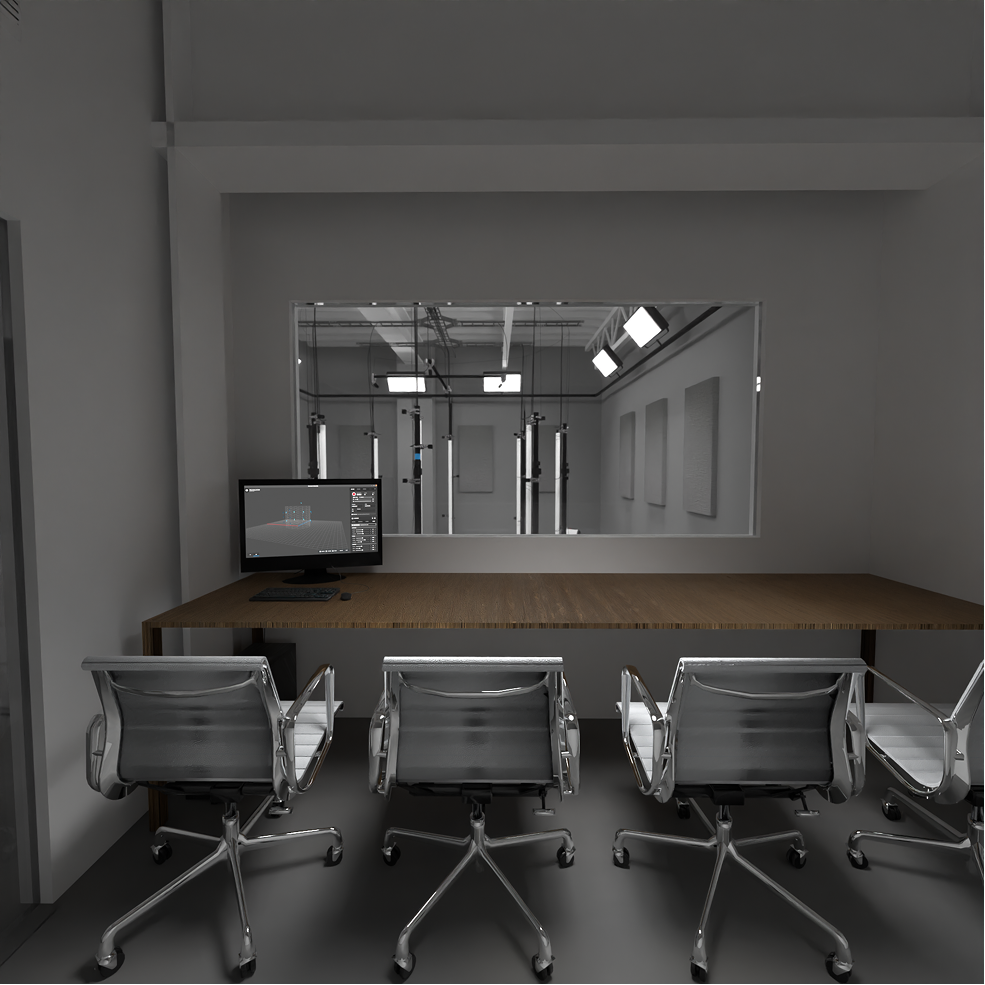
For maximum reliability, Evercoast systems can be delivered fully configured. If you prefer to build your own, we support custom configurations and provide clear specifications to ensure compatibility and performance.
Infrastructure planning covers power, cooling, and connectivity between the stage and control room. A clean design for cabling, electrical, and HVAC helps avoid downtime, excess heat, audio interference, and unnecessary visual clutter on set.
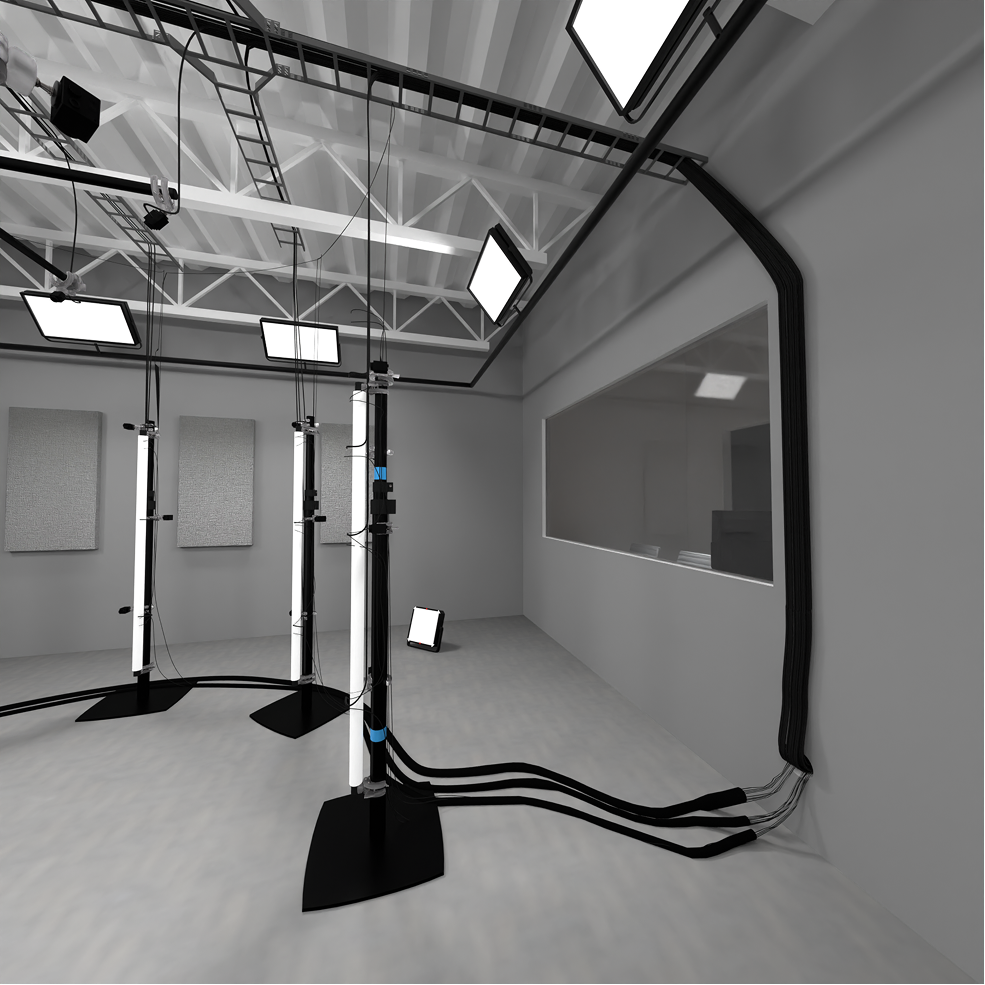
Requirements vary by installation and local code, but the priorities stay the same: stability, serviceability, and headroom for future expansion.
Studio operation typically runs from the adjacent control room, where sessions are monitored and directed. A host workstation or other core compute infrastructure handles camera control, recording, and processing, with hardware requirements scaling with camera count, camera type, and any real-time workflows.
For maximum reliability, Evercoast systems can be delivered fully configured. If you prefer to build your own, we support custom configurations and provide clear specifications to ensure compatibility and performance.
Infrastructure planning covers power, cooling, and connectivity between the stage and control room. A clean design for cabling, electrical, and HVAC helps avoid downtime, excess heat, audio interference, and unnecessary visual clutter on set.
Requirements vary by installation and local code, but the priorities stay the same: stability, serviceability, and headroom for future expansion.
Infrastructure planning covers power, cooling, and connectivity between the stage and control room. A clean design for cabling, electrical, and HVAC helps avoid downtime, excess heat, audio interference, and unnecessary visual clutter on set.
Requirements vary by installation and local code, but the priorities stay the same: stability, serviceability, and headroom for future expansion.
Infrastructure planning covers power, cooling, and connectivity between the stage and control room. A clean design for cabling, electrical, and HVAC helps avoid downtime, excess heat, audio interference, and unnecessary visual clutter on set.
Requirements vary by installation and local code, but the priorities stay the same: stability, serviceability, and headroom for future expansion.
Infrastructure planning covers power, cooling, and connectivity between the stage and control room. A clean design for cabling, electrical, and HVAC helps avoid downtime, excess heat, audio interference, and unnecessary visual clutter on set.
Requirements vary by installation and local code, but the priorities stay the same: stability, serviceability, and headroom for future expansion.
Studio operation typically runs from the adjacent control room, where sessions are monitored and directed. A host workstation or other core compute infrastructure handles camera control, recording, and processing, with hardware requirements scaling with camera count, camera type, and any real-time workflows.
For maximum reliability, Evercoast systems can be delivered fully configured. If you prefer to build your own, we support custom configurations and provide clear specifications to ensure compatibility and performance.
Infrastructure planning covers power, cooling, and connectivity between the stage and control room. A clean design for cabling, electrical, and HVAC helps avoid downtime, excess heat, audio interference, and unnecessary visual clutter on set.
Requirements vary by installation and local code, but the priorities stay the same: stability, serviceability, and headroom for future expansion.
Infrastructure planning covers power, cooling, and connectivity between the stage and control room. A clean design for cabling, electrical, and HVAC helps avoid downtime, excess heat, audio interference, and unnecessary visual clutter on set.
Requirements vary by installation and local code, but the priorities stay the same: stability, serviceability, and headroom for future expansion.
Studio operation typically runs from the adjacent control room, where sessions are monitored and directed. A host workstation or other core compute infrastructure handles camera control, recording, and processing, with hardware requirements scaling with camera count, camera type, and any real-time workflows.
For maximum reliability, Evercoast systems can be delivered fully configured. If you prefer to build your own, we support custom configurations and provide clear specifications to ensure compatibility and performance.
Infrastructure planning covers power, cooling, and connectivity between the stage and control room. A clean design for cabling, electrical, and HVAC helps avoid downtime, excess heat, audio interference, and unnecessary visual clutter on set.
Requirements vary by installation and local code, but the priorities stay the same: stability, serviceability, and headroom for future expansion.
Infrastructure planning covers power, cooling, and connectivity between the stage and control room. A clean design for cabling, electrical, and HVAC helps avoid downtime, excess heat, audio interference, and unnecessary visual clutter on set.
Requirements vary by installation and local code, but the priorities stay the same: stability, serviceability, and headroom for future expansion.